
The Things Which My Father Saw
On Nephi's Motivations

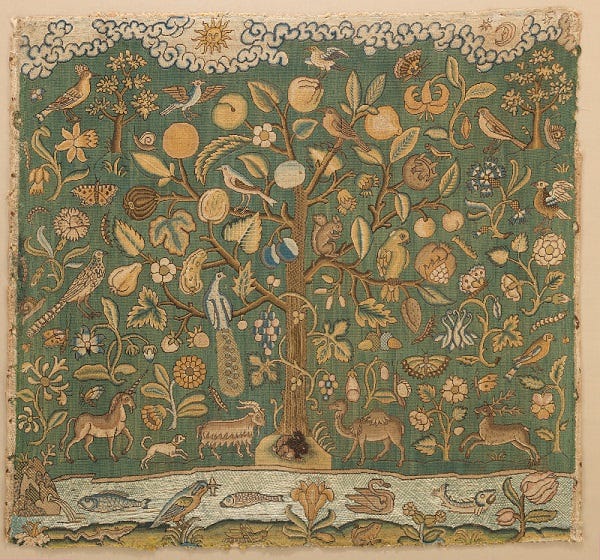
As Ben Spackman recently pointed out, in making sense of what is happening in 1 Nephi, we need to remember that Nephi is writing about these events decades later and that this is influencing what stories he chooses to tell and how he tells them. In fact, the Lord may have inspired Nephi to write 1 Nephi for the same reason He asked Joseph Smith to create a history of the church in 1838: to counter lies and false reports (see JS-H 1:1). In Nephi’s case, these lies and false reports would have come from Laman and Lemuel. It is entirely possible that Laman started claiming to receive visions and spiritual messages after Lehi’s death. Essentially, his claim would have been that Lehi’s prophetic mantle passed to him as the eldest son. If this is true, then one of Nephi’s aims in writing 1 Nephi may be to show that Laman and Lemuel were unworthy to receive the gifts of God because they rejected them and that Nephi is Lehi’s true prophetic heir.
If this is really Nephi’s aim, we would expect to see evidence of it in Nephi’s writing. And, as I wrote last week, it is clear in 1 Nephi 10 that Nephi wants to emphasize when and where he began having visions (i.e. while they were living in tents in the valley of Lemuel, long before they were in the promised land) and also that he is trying to emphasize , both in words and in structure, that his visions came directly in response to Lehi’s preaching. So, if we take this understanding of 1 Nephi 10 seriously, it seems to support the idea that one purpose of Nephi’s writing here is to show that he really is Lehi’s prophetic heir.
But Nephi does this not by explicitly going after Laman and Lemuel but by showing how remarkably strong the continuity is between Lehi’s prophecies and Nephi’s vision. Nephi wants us to compare his vision and Lehi’s teachings and we can quickly see that they are of a piece. Nephi sees not only the Tree of Life but also the history of the house of Israel that Lehi talks about in 1 Nephi 10:2-15: the coming of the Messiah, his life and death, the apostasy, the preaching of the gospel to the Gentiles, and the gathering of Israel. More than just inspiring Nephi’s vision, however, the prophecies of Lehi described in 1 Nephi 10 lay the groundwork for all the main prophecies and teaching contained in the small plates section of the Book of Mormon. It isn’t until King Benjamin that we get a new vision of Christ that doesn’t seem explicitly inspired by Lehi’s prophecies described here. Nephi’s quotations and interpretations of Isaiah and Jacob’s teachings in 2 Nephi 9 follow Lehi’s understanding of the plan of God. Nephi’s writings in 2 Nephi 31-32 draw on Lehi’s discussion of the baptism of Christ. Even the Allegory of the Olive Tree shows up in Lehi’s teachings. Enos and Jarom both carry Lehi’s cosmic vision of the future of the Nephites and Lamanites.
The bottom line is that Lehi’s teachings set the tone for a few hundred years of Nephite prophecy and revelation. To me, this startling continuity comes down to Nephi’s response recorded in chapter 10 (and the beginning of chapter 11). Note Nephi’s question to the Lord. It isn’t “when will the Messiah come?” or “what is the future of my people?” or “show me a vision.” It is: “I desire to behold the things which my father saw” (1 Nephi 11:3). This emphasizes the family relationship that is central here and carries the contents of these prophecies through the ages.
Recognizing Nephi’s connection to his father here is really important because, in our modern world, it is easy to lionize any kind of seeking after knowledge or information. But there is a curiosity that is born of lust, and it is just as destructive as any other vice. When we seek knowledge and information (even knowledge of God) to gratify our pride, gain power, or even purely for their own sake, that seeking can be destructive. The glory of God is intelligence, but it is intelligence directed toward bringing to pass the immortality and eternal life of man. It is an intelligence dedicated to deepening relationships through love, and this seems to be Nephi’s aim as well.
Thanks for reading! As always, you can write to me at latterdayss220@gmail.com with any questions, comments, or ideas.