
Latter-day Idols
Mene mene tekel upharsin

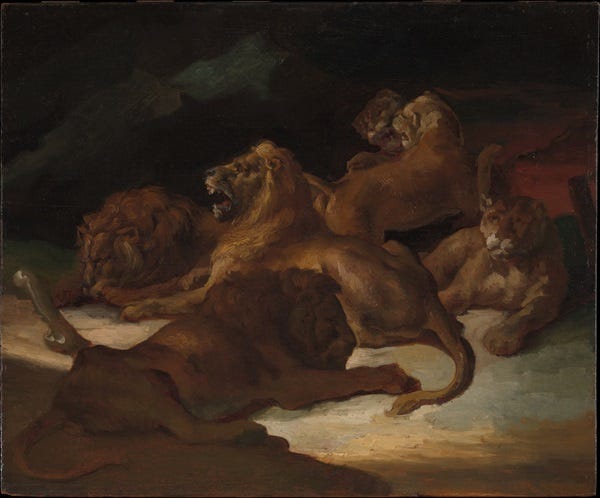
The prophet Daniel was put in a difficult but intriguing position from a young age. Imagine it: being kidnapped by a conquering empire, taken from your home, and forced into a way of life that is hostile to your beliefs. He daily walked the halls of palaces and temples dedicated to foreign gods and idols. He and his friends were given new Babylonian names. He learned scribal techniques, astrology, dream interpretation, and other things at the feet of idolatrous priests and courtiers. And in this environment, Daniel thrived. He beat the Babylonian scribes and priests at their own games. He remained an important adviser through several hereditary kings and another foreign invasion. Daniel is incredible.1
But Daniel hasn’t been on my mind just because he is amazing. No, it’s because today every member of the Church of Jesus Christ of Latter-day Saints finds him or herself more or less in Daniel’s position. We aren’t liable to be thrown into lions’ dens or fiery furnaces2, but spiritually the stakes are just as high. The Lord has led us out of the wilderness (see D&C 5:14), and Latter-day Saints the world over face social and political regimes with varying degrees of hostility to the Restored Church of Christ. But the first thing that Daniel has to teach us about this situation is that—at least for now—we have to accept that this is exactly where God wants us to be. It was this willingness to accept his place in Babylon that allowed Daniel to do what he did.
But accepting these circumstances raises more questions than it answers, both cosmic (Why would God put us in this position? When will He call us out?) and tactical (Is this practice or fellowship a step too far into Babylon?). I am not going to pretend I have any of the answers to those questions, but I think Daniel’s example can provide a useful framework for how to live in these circumstances. We can learn a lot from Daniel and others like him such as Shadrach, Meshach, Abed-nego, and Esther.
Recognizing Idols
One of the first tasks that Daniel and others faced was in recognizing idols and their influence in Babylonian society. It is difficult, from our modern vantage point, to understand how much different kinds of gods influenced and structured the lives of people in the ancient world. We don’t talk about our society in this way at all. Things that we might consider mundane acts of no consequence might be important to particular deities and taken as signs of worshipping them. To take one example that still has some modern resonance, the God of Israel asked the Jews to work for six days and take the seventh day for rest and worship. What if Babylonian gods asked for a different kind of work calendar? Would following that calendar constitute worshipping that god? If there is a difference in calendar, how do you determine if that comes from the influence of worshipping an idol or something else? Or, in a similar conundrum, if, as part of your schooling, you are given lodging quarters inside a temple dedicated to an idol, do you stay there?
You may have noticed that similar kinds of ethical dilemmas might be posed in our day as well. This is because, whether or not we realize it, our world is just as structured by idols and their attendant religions and ceremonies as Babylonian society was in Daniel’s day. Instead of being graven images of wood or stone or metal, our modern idols are build of modern materials: abstract ideas and concepts. People worship money and the economy, political power and the law, entertainment and sports, sexual desire and identity, or the king of the modern gods: science and knowledge. These idols structure our modern society in exactly the same way that the idols of Daniel’s day structured Babylon. Their influence is pervasive.3
Recognizing these truths illustrates the complexity of the problem Daniel faced. How do you move in society without acknowledging or worshipping, in some way, these gods? It isn’t possible. Daniel daily walked the halls of their temples and learned at the feet of their wise men, just as we must do. The key to doing this well is to recognize that there is good even in idolatrous religions. God is not a respecter of persons and will give liberally to those who intentionally pursue knowledge, even if they are not perfectly aligned with Him. We can learn much even from those who believe differently than us. This Daniel did, but he always kept his guard up, carefully repurposing and recontextualizing the knowledge he gained for the glory of God rather than of idols.
The Statue and the Furnace
Once Daniel and his friends recognized the Babylonian gods and their pervasive influence, they set clean and hard boundaries to protect themselves against that influence. Two of these hard boundaries are illustrated in famous stories: We will not bow down to other gods. We will not stop praying to our God. Daniel and company were committed to these boundaries even in the face of bodily harm and death.
The story of the fiery furnace is a particularly good example of how recognizing idols and setting boundaries fit together. Recent scholarship suggests that when Shadrach, Meshach, and Abed-nego were asked to bow down to the golden statue mentioned in Daniel chapter 3 that it wasn’t what we would typically understand as a clear-cut case of idol worship. Apparently, the noted location of the statue (Daniel 3:1) and the list of dignitaries required to attend (3:2) make it more likely that the dedication of this statue was more like the ratification of a treaty than a religious festival. Thus, bowing down to the statue was more understood as symbolic acceptance of the treaty than worshipping a god. The contemporary equivalent might be like being asked to sign a petition where ninety percent of it is about funding research to cure cancer, but the first sentence claims that science is the source of all good things (i.e. God).
This might seem innocent enough to most people, but not to Shadrach, Meshach, and Abed-nego. Given the choice between the statue and the furnace, they chose the furnace. This choice can be compared with the Anti-Nephi-Lehis in the Book of Alma, who, trying to escape a culture of violence, chose death over lifting up their swords in self-defense. In both cases, they set clean, strict boundaries for themselves in order to avoid sins that they were more at risk of committing because of their cultural situations. Seen from the outside, these kinds of boundaries and decisions may seem extreme, but living faithfully in an idolatrous world seems to require them.4
The King’s Food
Daniel and his friends also engaged in symbolic resistance. The Book of Daniel begins with the story of Daniel rejecting some of the king’s food. We don’t know the full details of why Daniel felt that eating the king’s meat and wine might “defile him” (Daniel 1:8). It was likely related to the worship of Babylonian gods, directly or indirectly. But this incident seems to be different from the stories of the fiery furnace or the lion’s den. What is at issue is not direct bowing down to an idol or a ban on prayer to the God of the Israelites, but simply eating food.5 At the same time, the enforcement from the Babylonians on diet doesn’t seem to be as strong or as imminent as in the other stories. The head of the eunuchs does seem to worry that his job (and life) may be in danger if he treats some of the young men differently than others, but the Babylonians don’t seem to see it as a deeply religious or moral issue. So what’s going on? Why does Daniel make a big deal about this when it isn’t worse than other things he seems to readily accept, like learning skills from idolatrous priests?
This is what I am calling symbolic resistance. In the other famous stories mentioned above, it is notable that the king initiates something (commanding or forbidding worship) with Daniel and friends defending their beliefs. Here it seems more like Daniel is going on offense. They are being treated well, like the other young men, and Daniel insists that they be treated differently. In fact, it is likely because the food itself matters so little to everyone that Daniel speaks up about it. The difference he is creating here may be purely symbolic. It is a reminder to the Babylonians and to himself and his companions that they are different and will always be different.
Because that is ultimately what Daniel’s example shows us. If the Lord’s people are unable to be a peculiar people that are politically separate from all others (which is necessary to fulfill the mandate to bless all the nations of the earth) then we must find other ways to make ourselves peculiar. We must establish signs to God, ourselves, and others that we are different. It is at this symbolic level of resistance when we are fully able to exist in an idolatrous society while openly worshipping our God.
The good news is that in our world of modern idolatry, the pieces are already in place to help us live this way. Practices like fasting and observing the sabbath help set us apart and mark resistance against the power of the modern idols. As we tread carefully and heed the advice of church leaders, we can recognize the influence of idols in the world. “For the day of the Lord soon cometh upon all nations… and the Lord alone shall be exalted in that day. And the idols he shall utterly abolish” (2 Nephi 12:12, 17-18).
And this isn’t even counting some of the more apocryphal stories about Daniel.
Yet!
If you want a sociological defense of these claims, I’d recommend this book and this article.
Jesus himself was similarly extreme: “If thy right eye offend thee, pluck it out, and cast it from thee… and if thy right hand offend thee, cut it off, and cast it from thee: for it is profitable for thee that one of thy members should perish, and not that thy whole body should be cast into hell” (Matthew 5:29-30).
There are some arguments were that the issue is that the meat and wine may have come from the temples and thus had been offered to idols, which might move this incident closer to the fiery furnace incident. However, it is also telling that Daniel doesn’t specify this as a condition of the food he is willing to eat and it is just as likely that the grain would have been temple offerings as the meat or wine.